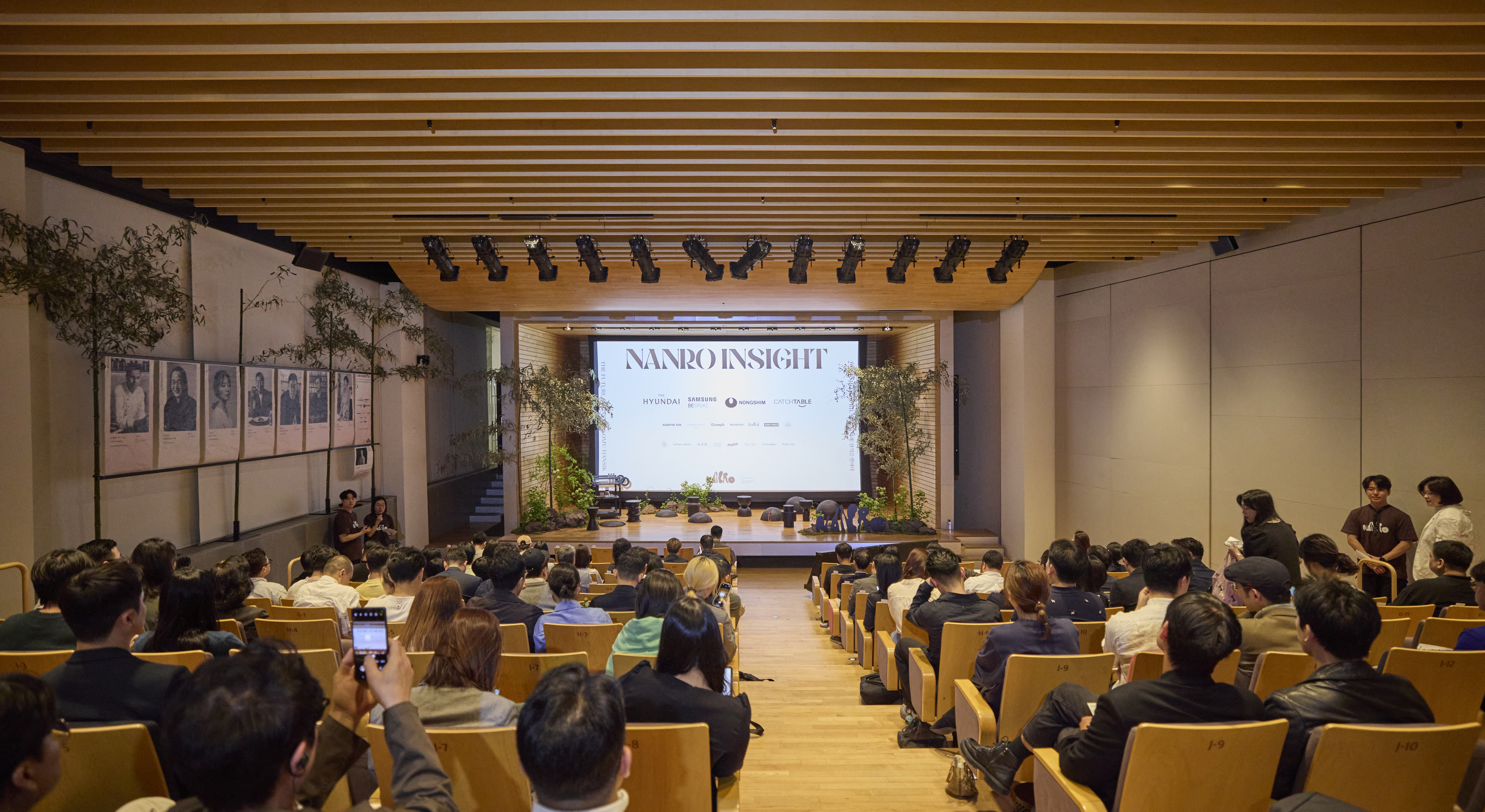
On April 29 and 30, <NANRO> brought together experts from Korea and abroad at the Leeum Museum of Art for two days of conversation under the theme "The Future of Gastronomy: Talking HANSIK." The gathering examined how Korean cuisine can grow into a sustainable global industry on the back of the worldwide K-Food wave, and searched for the business openings that come with it.
The Future of Gastronomy — HANSIK: VALUE-UP
Talking Hansik
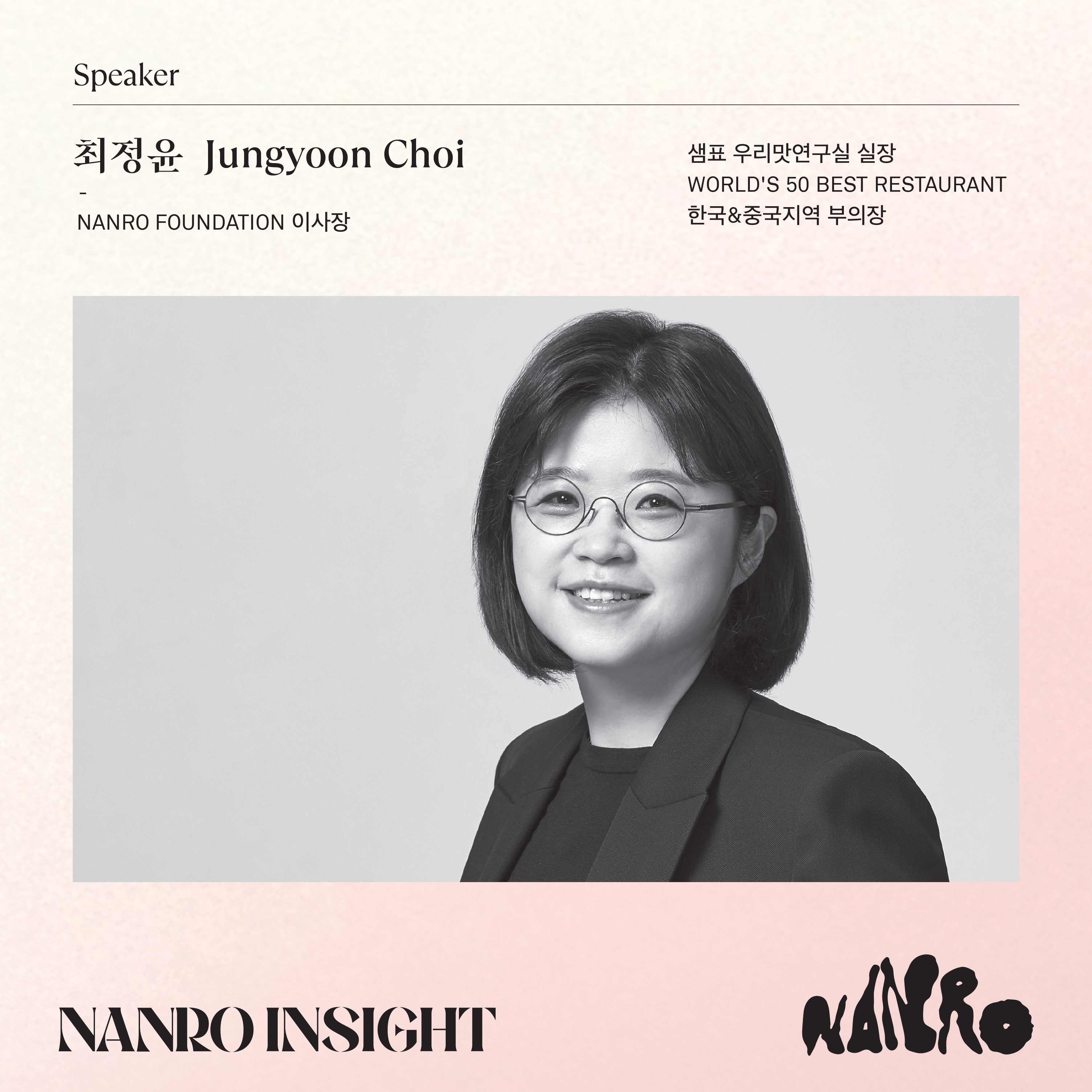
▶ JungYoon Choi, Chairperson, NANRO Foundation
"For the next five years, honestly, Hansik's global rise will keep moving even if we do nothing. But we shouldn't be looking only at those five years. Ten years, a hundred years, maybe further out — how do we settle Korean food culture into the daily lives of people around the world? How do we carry Hansik forward as a sustainable culture? Those are the questions that matter, and the time to ask them is now. That question is exactly what NANRO was born from: a wish to raise the value of Hansik and to connect the world through it."
Raising Hansik's value, turning it into business
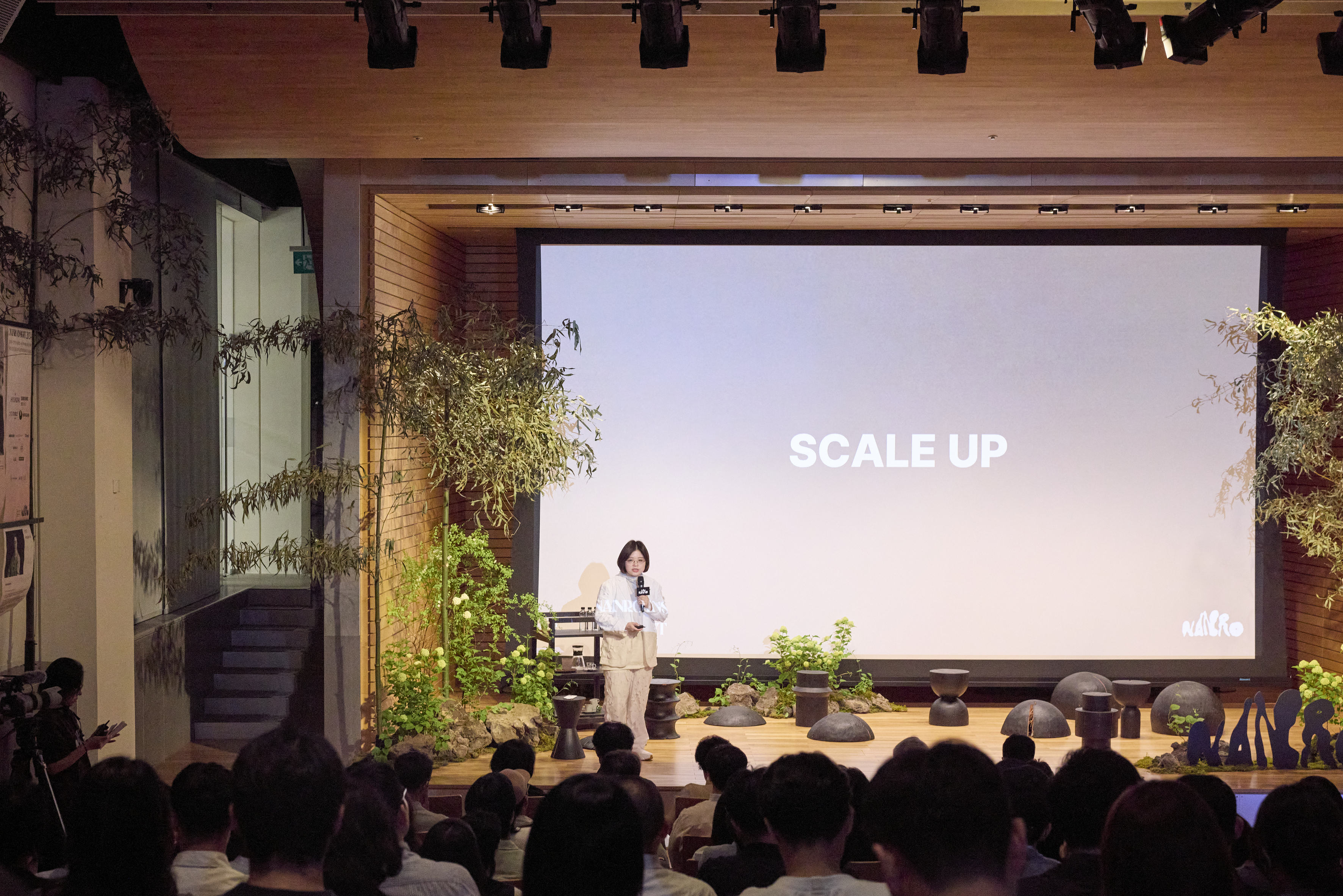
The 2024 Nanro Insight programme was built around two axes — Hansik's value-up and its scale-up. Over two days, "value-up" was framed as raising the worth of Hansik through new attempts that bridge tradition and the present, while "scale-up" was framed as the strategy for pushing beyond a single restaurant into global business.
JungYoon Choi, Chairperson, NANRO Foundation:
"Over two years, more than 300 experts from many different fields have come together with us to ask one question: what does Hansik need in order to succeed? Two conclusions came out of it. The first was that even we don't really know our own Hansik — we need to raise the value of Hansik itself. That's why we made value-up the theme of day one.
The second is scale-up. For any of this to last, it has to keep going as a business. Not just one restaurant, not just one dish — for people anywhere in the world to enjoy this, we have to scale it up. Our nanrohoe gatherings bring in finance experts and people from distribution and other fields who share a lot of advice with us. Day two takes what we've discussed and turns it into a conversation about how to turn Hansik into business and where the scale-up levers are."
Connected by the heat of the brazier
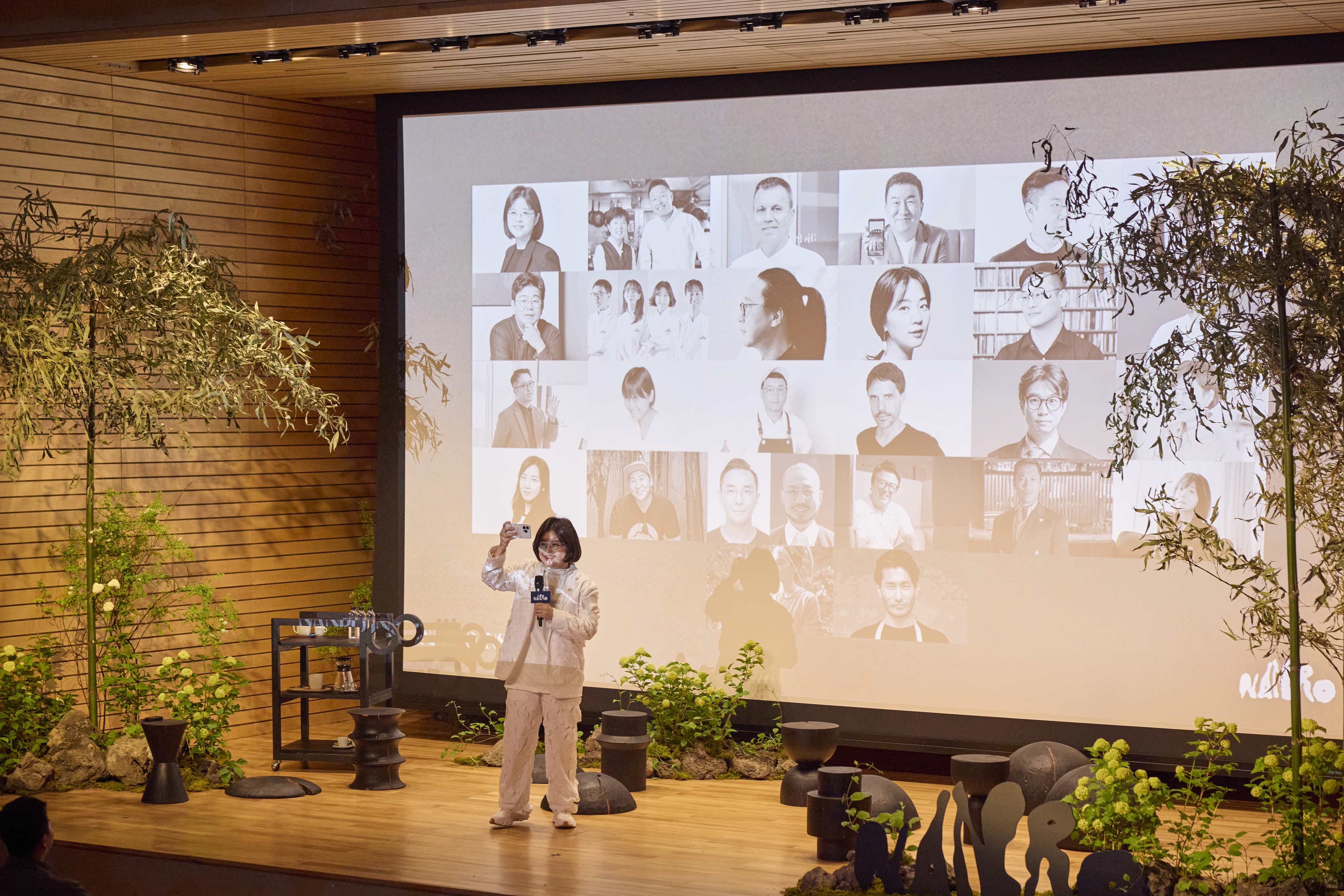
The keyword running through both themes was "connection." Chairperson Choi emphasised the need for links between tradition and the present, between Korea and the world, and between Hansik and other industries — and argued that these links are what will make Hansik's future brighter.
JungYoon Choi, Chairperson, NANRO Foundation:
"If there's one thing I hope you carry with you across these two days of Nanro Insight, it's this: connect. Right now, what matters most at NANRO is the connection between friends. When you work inside a single industry you tend to only meet people from that same industry. What nanrohoe is after is different — encounters across industries, between tradition and the present and the future, between Korea and the world, between Hansik and other sectors.
What NANRO wants to be, going forward, is the accelerator of Hansik as an industry — so that Hansik can last fifty, a hundred years. So that people working in Hansik don't have to feel alone, and so they can be boosted by connections with other industries. That's the spirit behind this gathering: we've brought together thirty-one speakers from around the world, along with everyone else here, in the hope that all of us leave connected."
Why Hansik research needs a scientific approach — now
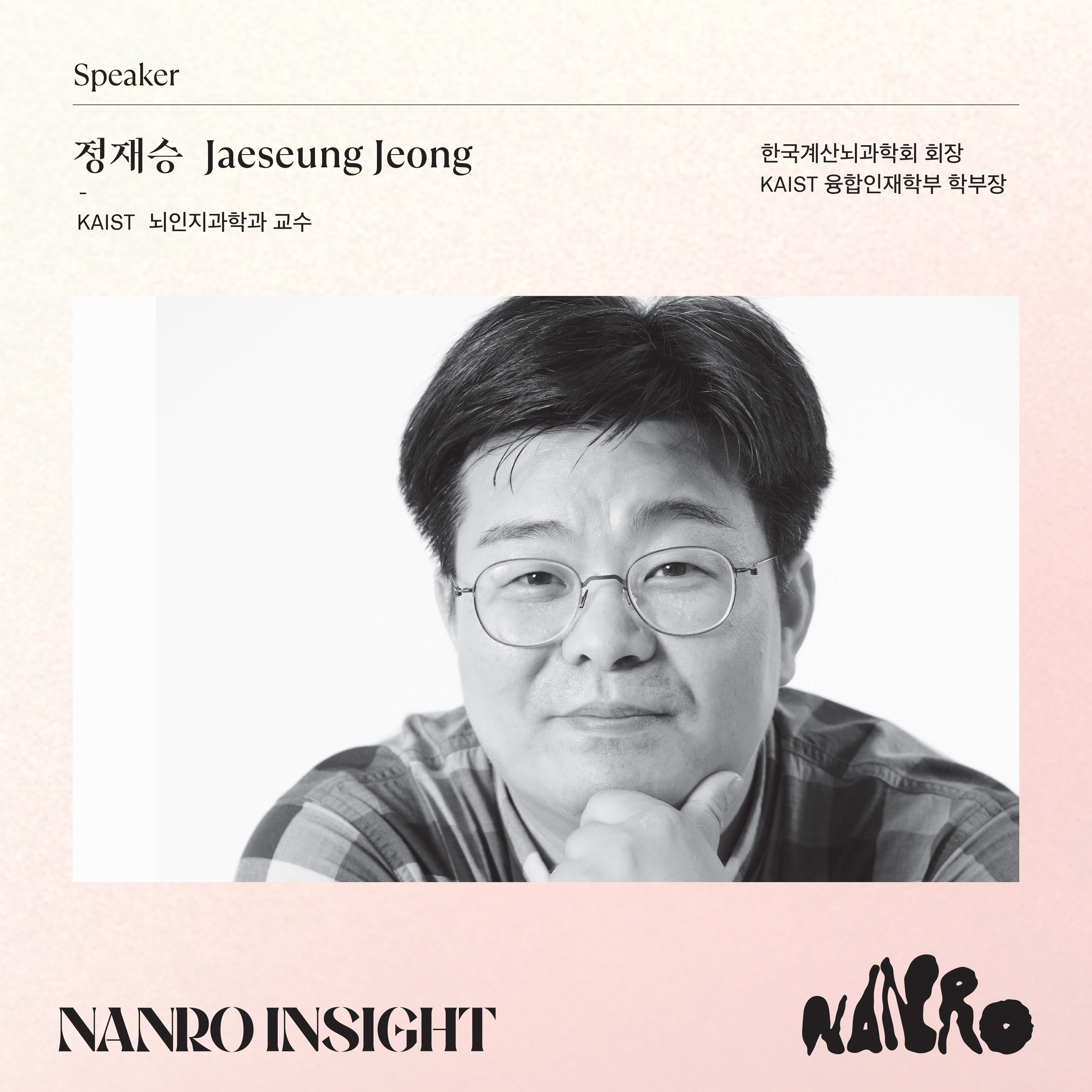
▶ Professor Jung Jae-seung
"I thought it might suit the spirit of nanrohoe to have a scientist introduce the Nanro Symposium, so I'm glad to be here. I'm a physicist who studies the brain. Within brain research, the area I focus on most is choice. The human brain has evolved through the choices we make about food, and you could say that's what led us to the civilisation we have today. That's what I'd like to talk about.
My hope is that we now begin to explore Hansik, research it, approach it scientifically — that we give it a philosophy and a structure, and put it into a language the whole world can understand. And I hope nanrohoe is at the centre of that. May what starts with nanrohoe grow the whole field of Hansik along with it."
Why cooking calls for a scientific approach
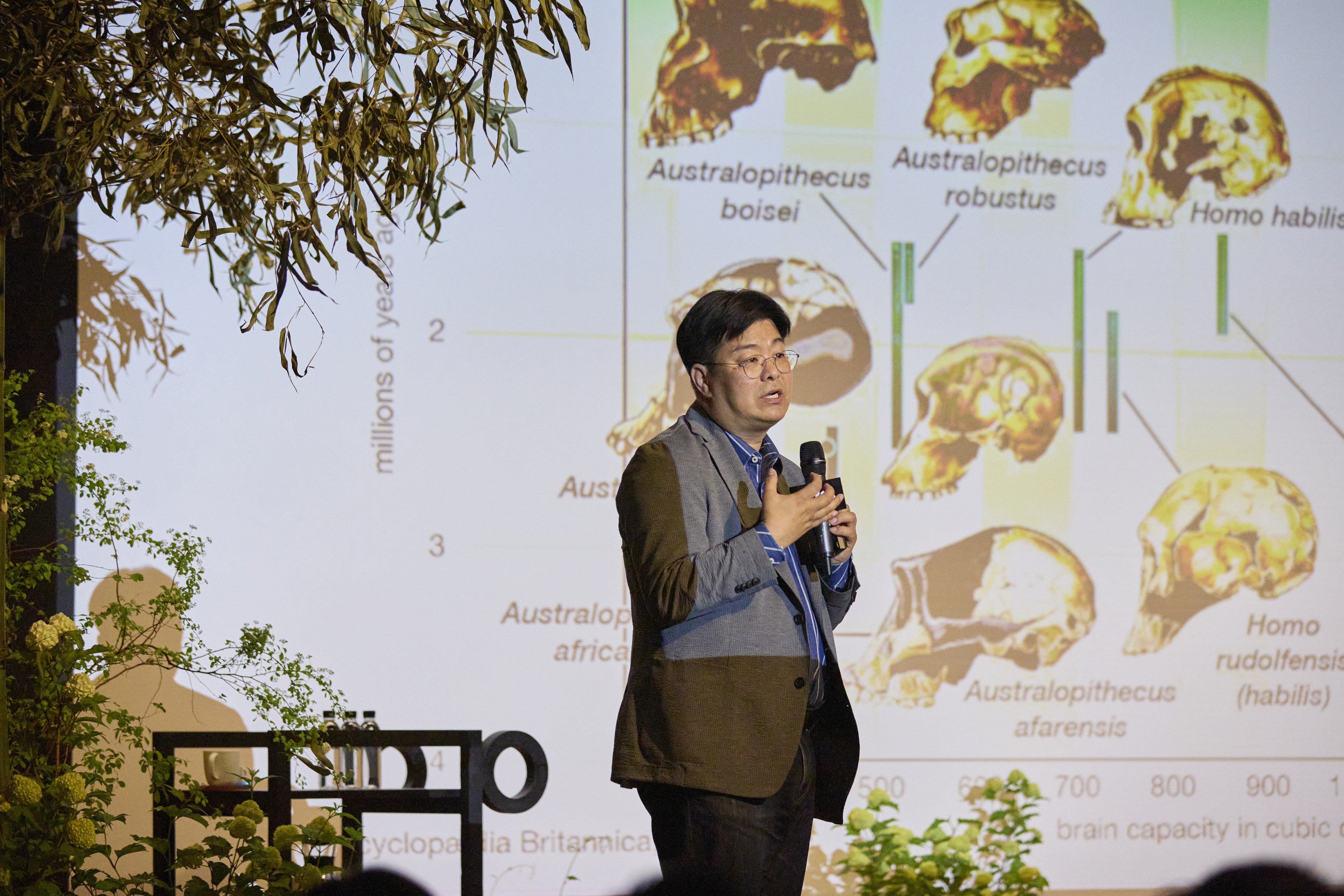
As a scientist who studies the brain, Professor Jung argued that our cooking instinct has done a great deal to shape how our brains evolved — and continues to shape our lives in profound ways. Which is why, he suggested, approaching cooking scientifically is one of the things we need if we want to understand human beings.
Professor Jung Jae-seung:
"Cooking turns out to be one of the things only humans do. That's why I think it's the cooking instinct that made us what we are. Humans have the highest brain-to-body-weight ratio of any animal. But no matter how large the brain is, if most of the food's energy goes into moving the body or into digestion, there's not enough left over to run the brain — and that limits what intelligent behaviour we can produce. Once we started cooking with fire, though, we cut the energy the body needed and boosted the energy going to the brain.
The more I've looked into research on food, the clearer it becomes that food shapes our lives enormously — and that it offers extraordinary insight into what kind of species we are.
Modern science is entirely equipped to approach food systematically. Food engineering, food science and other disciplines let us analyse the food itself, and also analyse how humans behave and how their brains respond while eating. In other words, treating cooking scientifically is another way of studying human beings themselves."
Food and the human brain
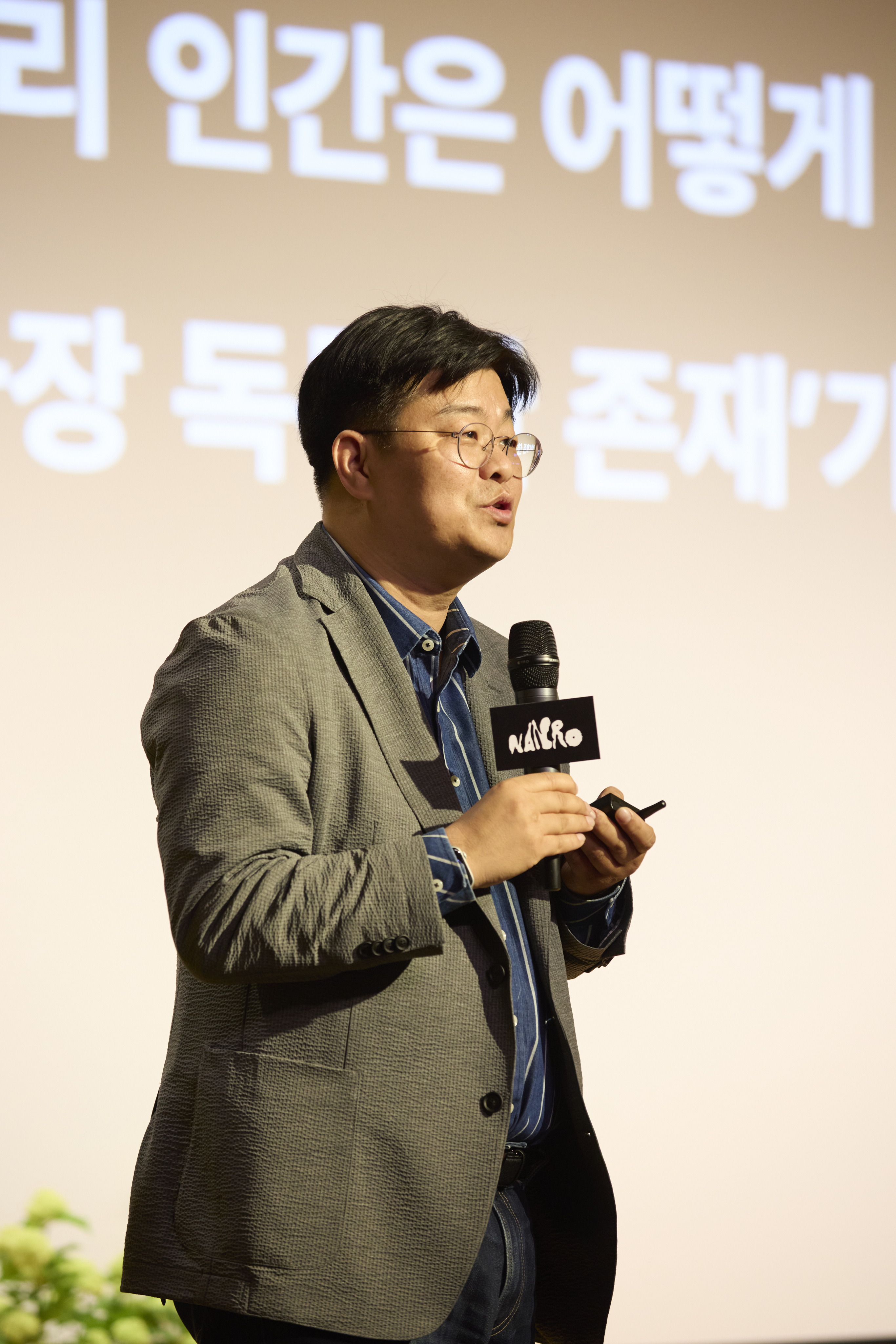
So how, exactly, can cooking be a way to study the brain? Professor Jung walked through several experimental examples to explain the link.
Professor Jung Jae-seung:
"There's a study we call the sushi problem. We served sushi to close to three hundred people and watched the order in which they ate. What was remarkable was that just from what someone chose first, we could predict what they'd eat next.
Eating is a deeply psychological act. Take the same wine and put a higher price tag on it: when people drink it, the taste-processing region of the brain responds as though it really is better than the cheaper-labelled bottle.
Here's another example of how psychological eating is. Could you eat back the phlegm you just spat out? It came from your own mouth, but you can't. Just thinking about it turns the stomach, doesn't it? That's how tightly the act of eating is bound up with the brain."
So far we've looked at why food deserves a scientific approach, and why we need to be connected to one another around Hansik. But what exactly are we so intent on carrying forward and building on? In the next piece, we take up that question with chefs Cho Eun-hee and Park Sung-bae of Onjium and Team NANRO Lab, under the theme of IDENTITY.