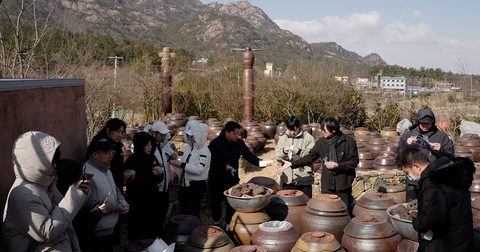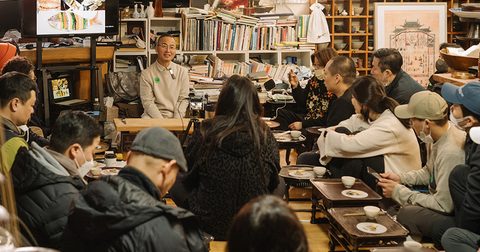
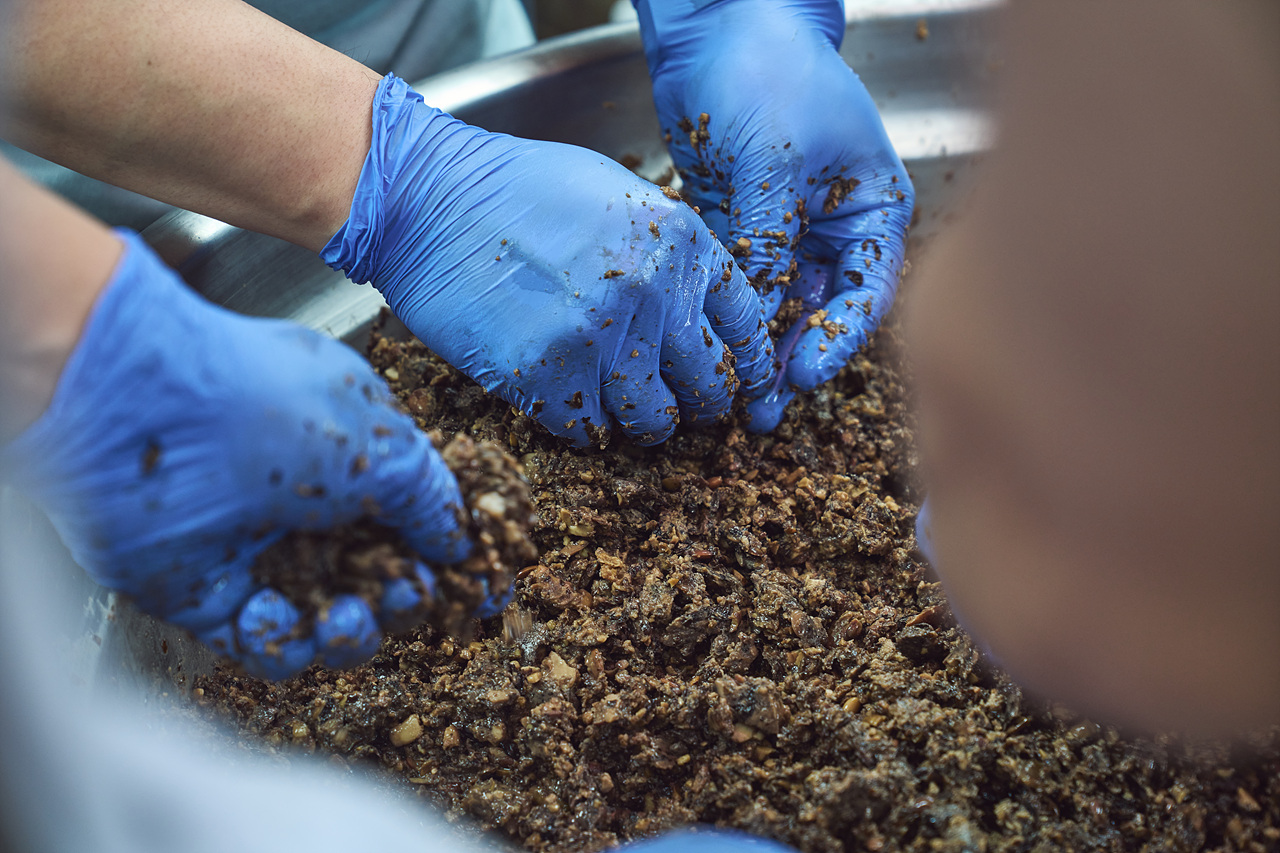
Director Kim Myung-sung's fermentation series enters its third session. This installment gathered the fork in the road between doenjang and ganjang — the hands-on splitting of the ferment — alongside the science of protein breakdown and amino acid formation, and a closing reflection on the philosophy and creativity that shape regional jang and kimchi. Looking back at the arc these fermentations have travelled, the day reminded us that fermentation is not a quiet aging process; it is a deep conversation between people, time, and nature.
The Golden Hour of Splitting the Jang
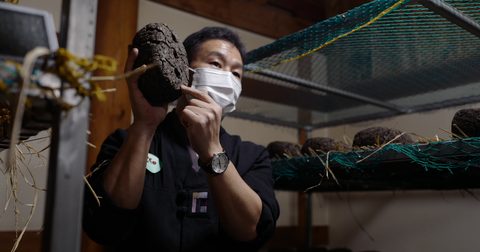
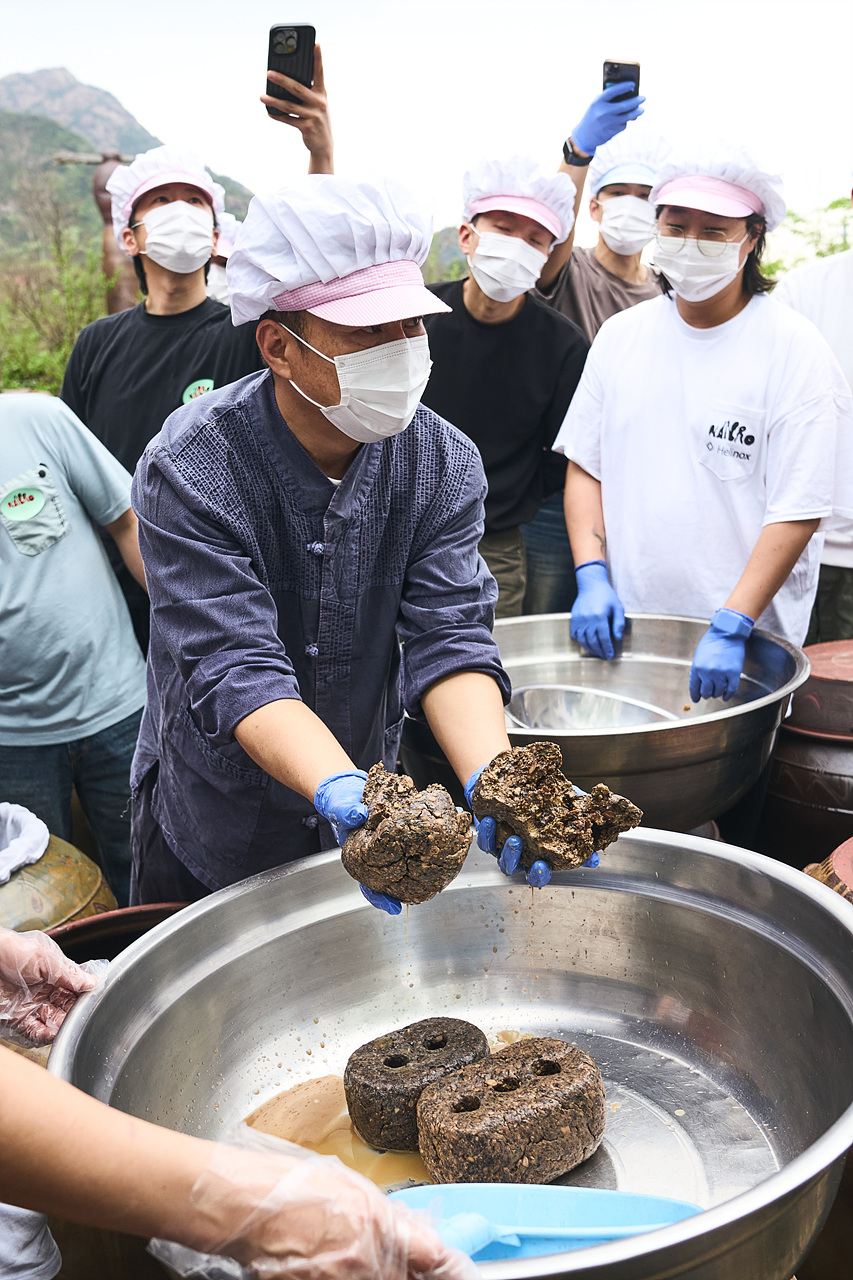
Director Kim frames the moment of splitting the jang as the pivot on which doenjang and ganjang part ways. It is not a mechanical separation of the meju; it is the narrow window in which flavor is decided by how ripening and breakdown are balanced. Skip the split, or misjudge it, and astringent or sour notes creep in — often carrying the entire ferment down with them.
▶ Kim Myung-sung, Director, Fermentation Research Lab:
"If you make the meju too thick, air can't move through it. So you want it neither too thick nor too thin — a pillow shape works well. Microbes need to breathe. For the surface culture to migrate inward, air has to circulate. But if the meju is thick and holds too much water, the inside rots. Too narrow a surface slows fermentation; too wide, and the moisture escapes and it dries hard. That's why our ancestors settled on the pillow-shaped meju — long, with a consistent cross-section."
The Key to Umami: Salinity
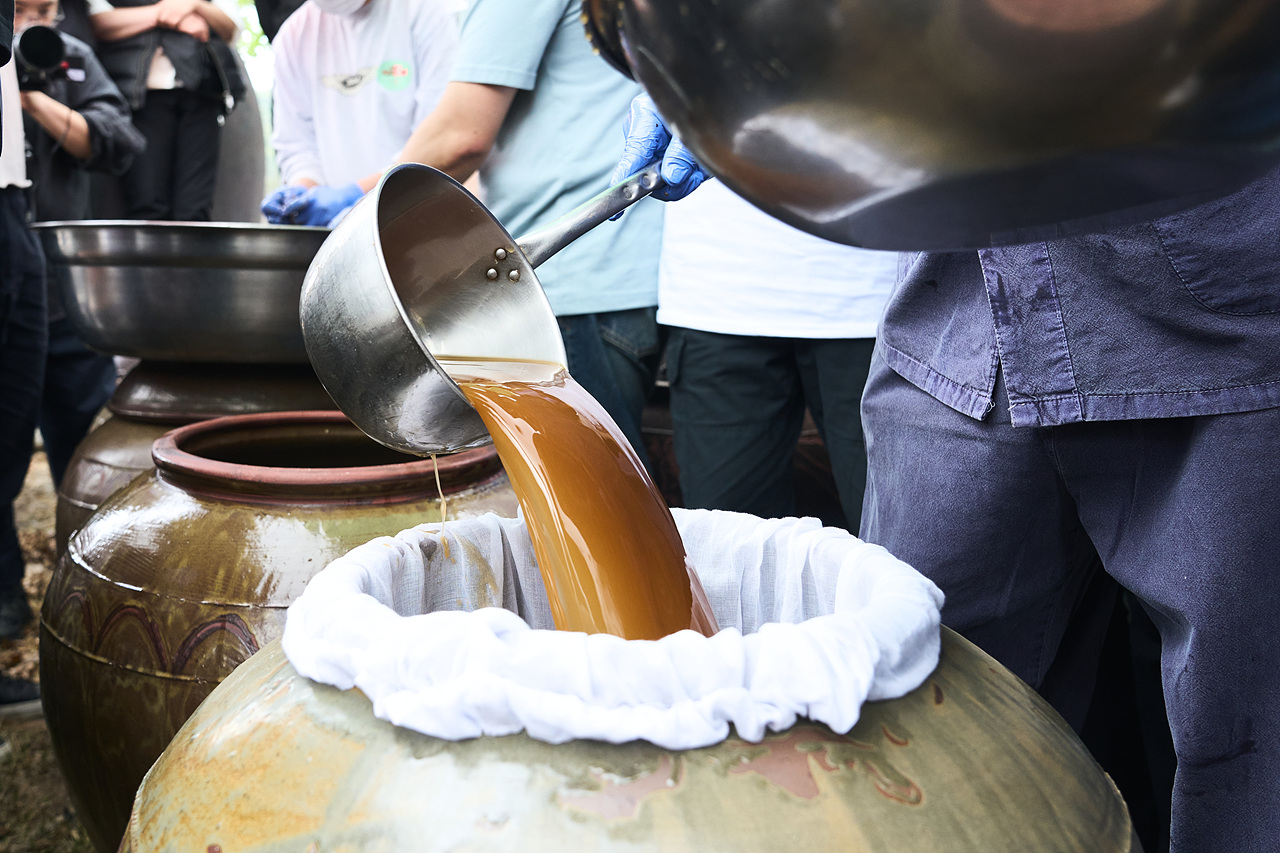
Flavor in jang begins where soy protein is broken down. When those proteins are converted into amino acids, the core notes of umami take shape — and that shift decides the quality of both doenjang and ganjang. Director Kim also stressed that the salinity of the brine poured over the meju sets the direction of the ferment. Getting that salinity right is what keeps the doenjang environment stable enough for the microbes to do their work.
▶ Kim Myung-sung, Director, Fermentation Research Lab:
"When proteins are cut down into smaller molecules, we call them amino acids — and amino acids are the primary carrier of umami. Once you know how to guide that conversion in doenjang, you have plenty of savoriness on hand. The quality of both doenjang and ganjang depends on how thoroughly the soy protein is broken down. And for that breakdown to work, the salinity of the brine on the meju is decisive. Too salty and you won't get doenjang; too weak and the ganjang won't come. The salt concentration of the water on the meju is what sets the direction and quality of the whole jang."
Reading Nature: The Timing of Fermentation
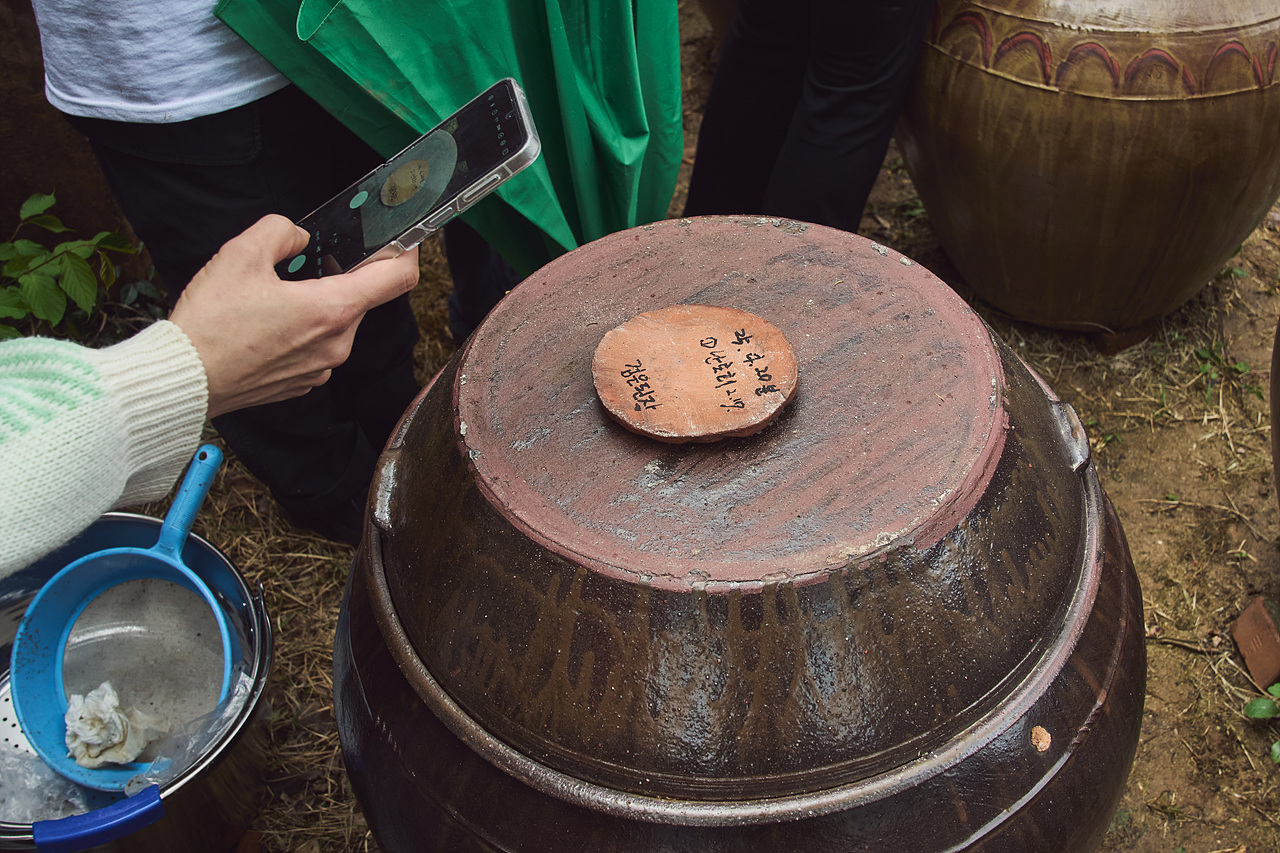
Once the jang is set, management comes down to reading the solar terms and the weather. Director Kim cautioned that opening the jangdok after Gogu — the term when the humidity in the air rises sharply — is one of the surest routes to rancidity and mold.
▶ Kim Myung-sung, Director, Fermentation Research Lab:
"Once Gogu passes, the humidity climbs abruptly. The air carries far more moisture, and if you open the jang jar in that window, all of that water goes straight in. When the jang takes up that moisture, the flavor shifts and the ferment breaks — that's when rancidity begins. The microbial balance inside changes too, and mold gets an easy foothold. So after Gogu, I ask people not to open the jang unless they truly have to. If you must open it, do it briefly in the morning and close it right back up. Miss that window and a year's worth of care can be undone in an instant."
Kimchi Is an Experiment
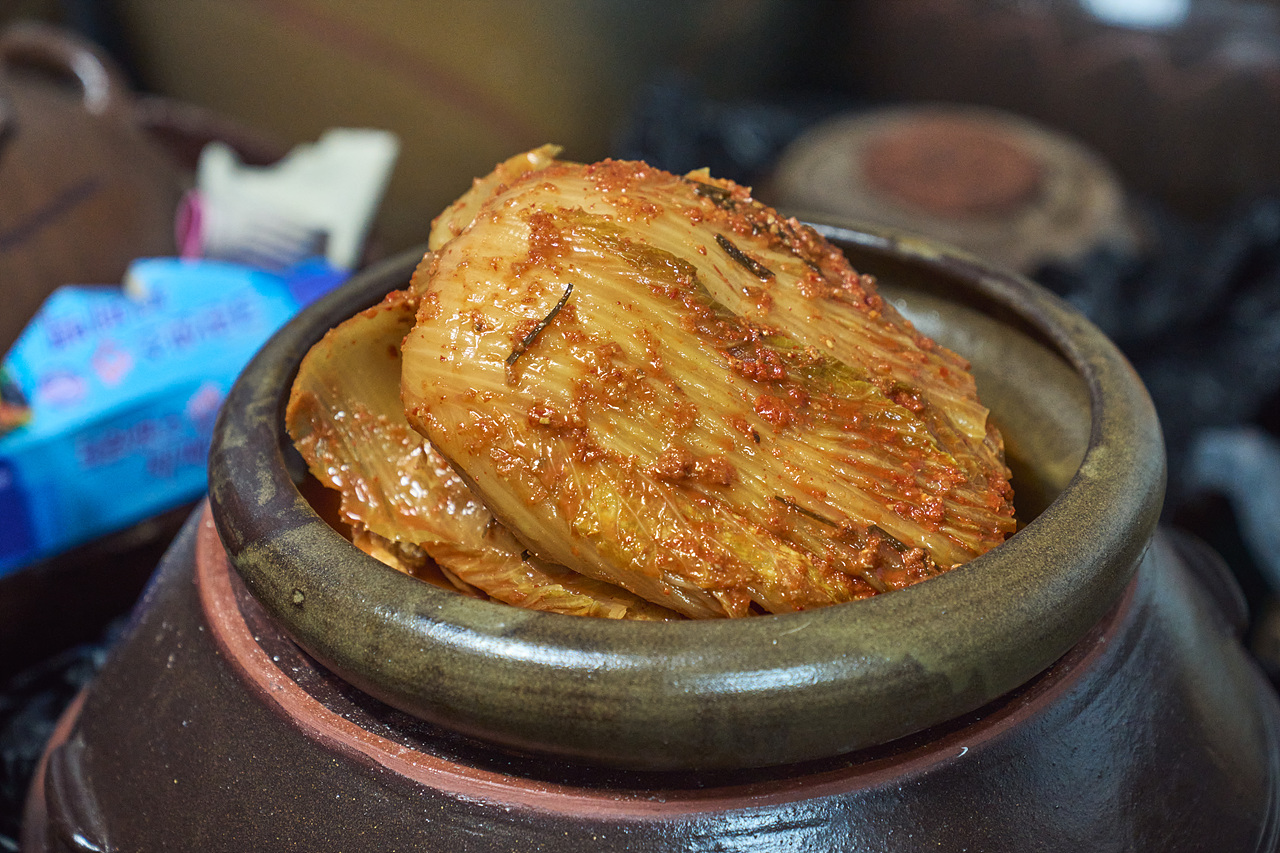
At the end of the jang discussion, Director Kim turned toward kimchi — another fermented staple, but one governed by an entirely different logic. Kimchi is not a fixed formula; it is a ferment completed each time by a new combination of variables. Unlike jang, which is shaped by time, kimchi's aroma, texture, and depth shift completely with each choice of ingredient and structure. In that sense, kimchi is fermentation as creative experiment.
▶ Kim Myung-sung, Director, Fermentation Research Lab:
"Usually people tuck the seasoning inside the cabbage. But you can also layer it — one outer leaf, seasoning, another outer leaf, more seasoning. Just swapping the jeotgal completely changes the fermentation. Anchovy sauce, sand lance sauce, salted shrimp… same salinity, different ingredient, different result. So making kimchi isn't a recipe; it's an experiment. Even when you do everything the same, it comes out different every time."
The Ingredients That Design a Kimchi Ferment
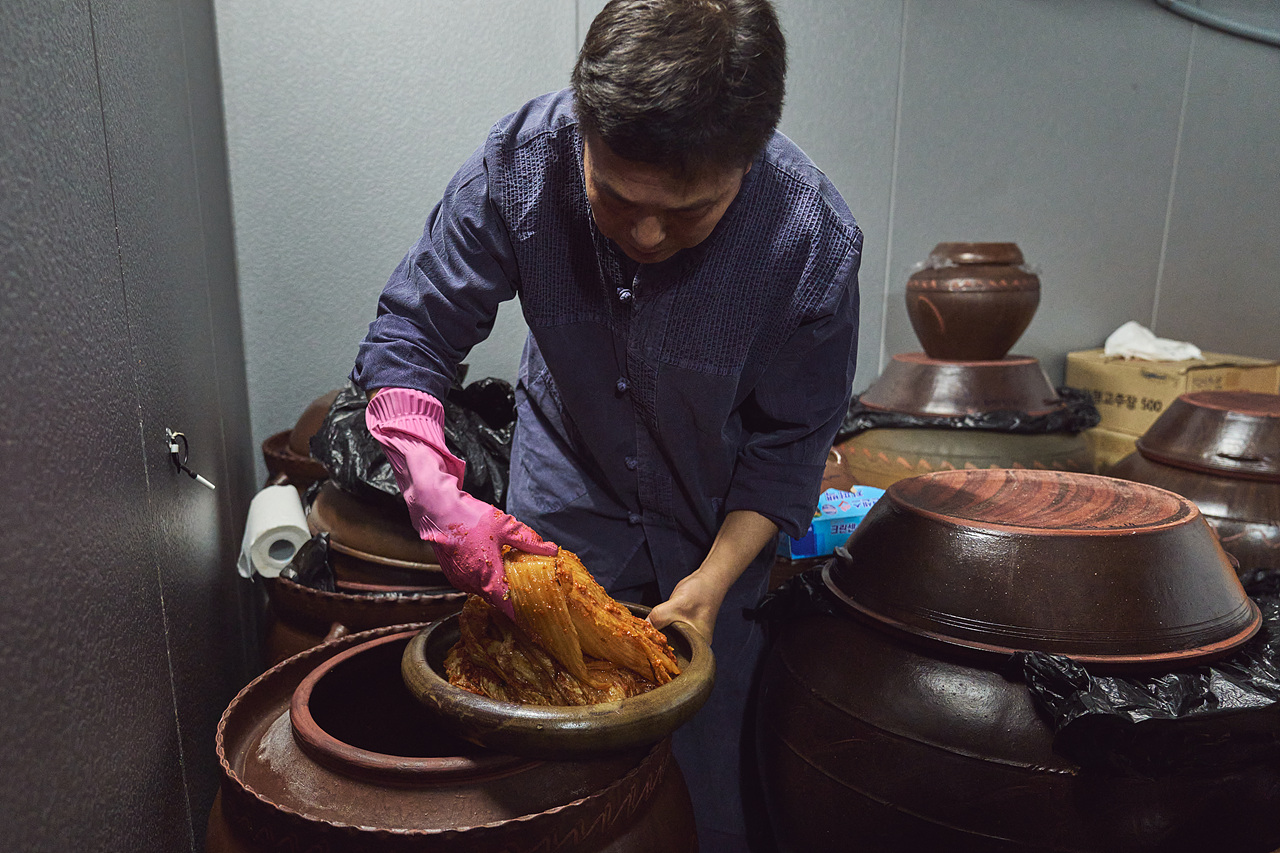
Every ingredient inside kimchi does more than contribute flavor — it steers the flow and direction of the ferment. Scallions and mustard greens, jeotgal, seaweeds, cheonggak — each one modulates aroma, umami, texture, and pace in its own way, and the way they combine and layer becomes the fine-grained variable that decides both kimchi's character and how complete the ferment feels. In that sense, making kimchi is closer to designing a fermentation through its ingredients than following a cooking method.
▶ Kim Myung-sung, Director, Fermentation Research Lab:
"Scallions are non-negotiable in kimchi. In a kimchi, scallions are almost a broth — the taste of the kimchi liquid actually comes from them. You can't leave them out. Large scallions and small scallions are different animals: small scallions have a sweetness to them, while large scallions are pungent, aromatic, and leave a longer finish. So you either mix them or pick one depending on what you want. People ask if mustard greens are essential — they aren't, strictly speaking. But they carry a fermentation aroma that nothing else provides, and that aroma sets the direction of the whole kimchi. Some households add sea mustard or kelp; those bring out juiciness and umami. Same with jeotgal — anchovy, sand lance, salted shrimp all lead to completely different results. Cheonggak is an interesting one, too: it has no flavor on its own, but once it ferments inside the kimchi it produces a distinctive aroma. The depth deepens, and that comes from the fibrous structure of cheonggak. A kimchi with cheonggak also has more bite. Aroma and texture both improve."
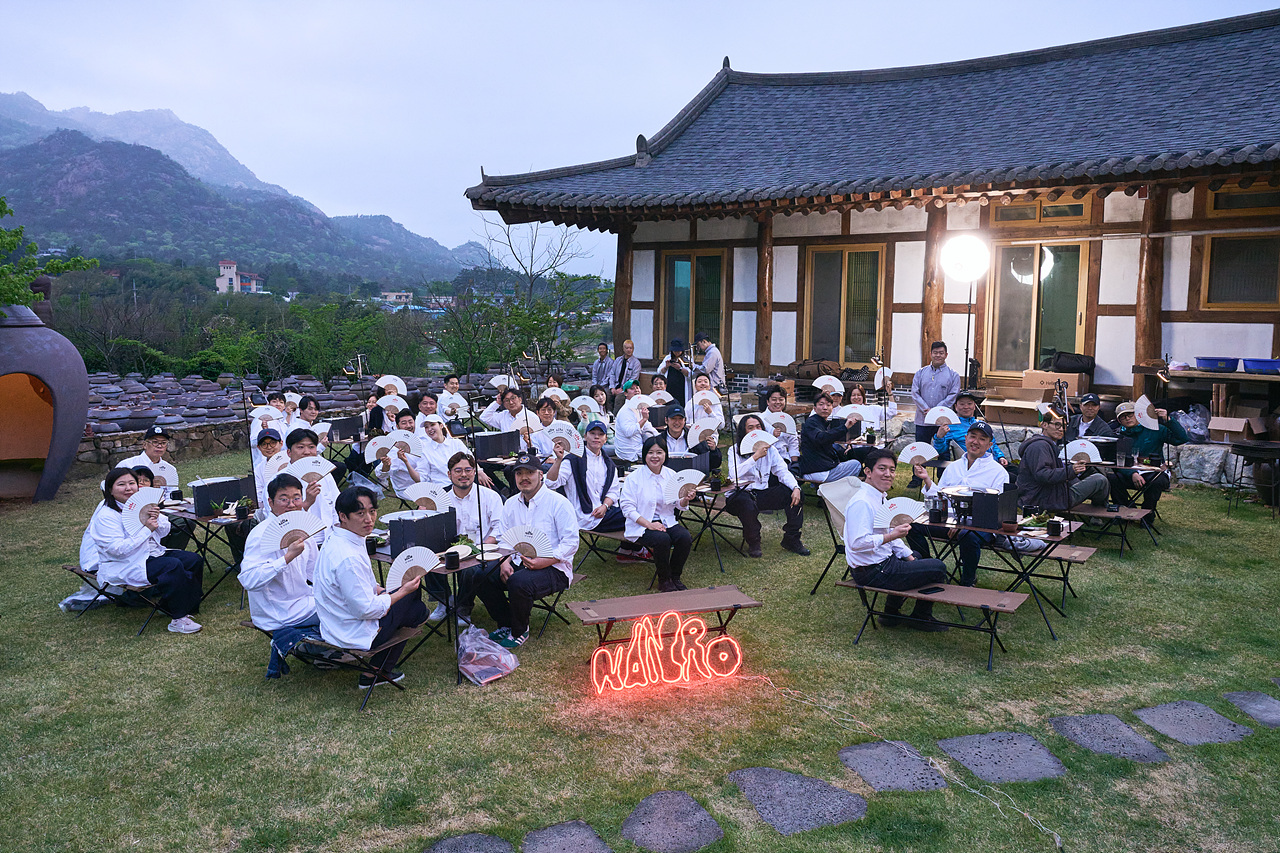
This session was a reminder that making jang is not the recall of a recipe but a sum — of the delicate senses and reasoning that read temperature and humidity, the seasons and the passing of time, and the breath of the ingredients themselves. From splitting the jang to the experiments of kimchi fermentation, questions and answers moved between people and nature, time and hand. Fermentation is never a matter of instinct alone. It is the practice of reading the conditions, recording the flow, and returning to each step the way one designs a life. This third session let us look at that practice at its deepest, and we hope this record becomes a quiet marker for anyone who wants to learn fermentation again. Somewhere between the traditional and the fast-tracked, another jang is slowly ripening within each of our lives.