Making jang is not a skill you learn once and set aside. Even with the same beans, the same tools, and the same environment, the result can shift from batch to batch. This session moved past "the way it was taught" and asked instead how years of repetition, failure, and the small adjustments that came out of them shape the quality of the finished jang.
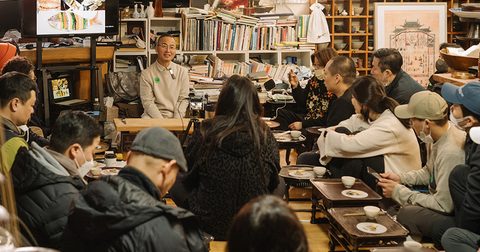
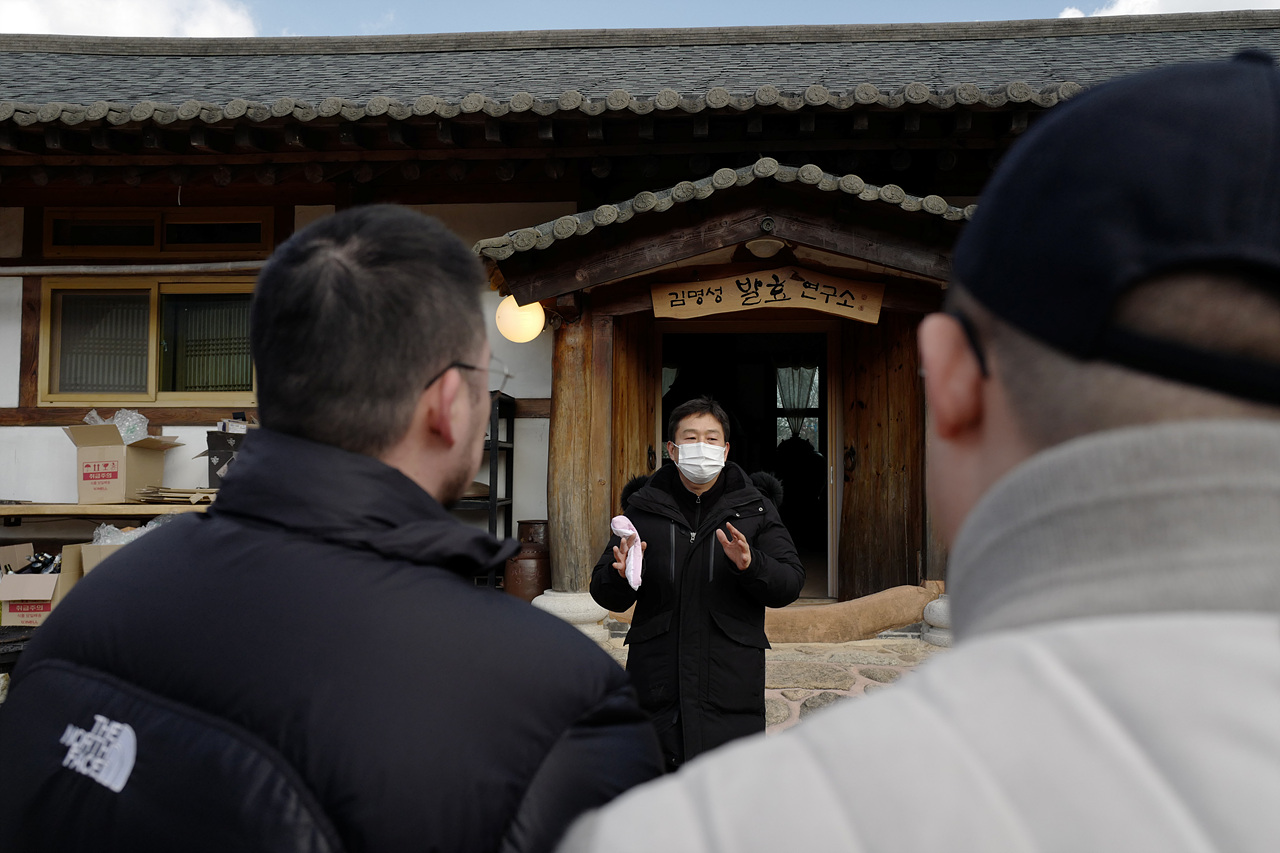
Director Kim Myung-sung treats tradition not with intuition but with concrete numbers — not with rough estimates but with accumulated experimental results. It was less a lecture that recites theory and more a working session dense with the details only someone who has actually put it into practice can offer.
A Design for Balanced Fermentation
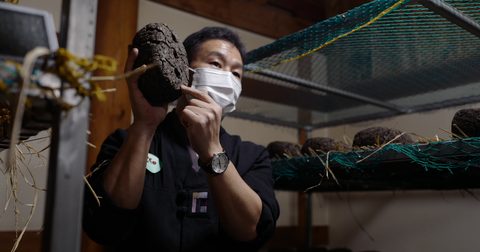
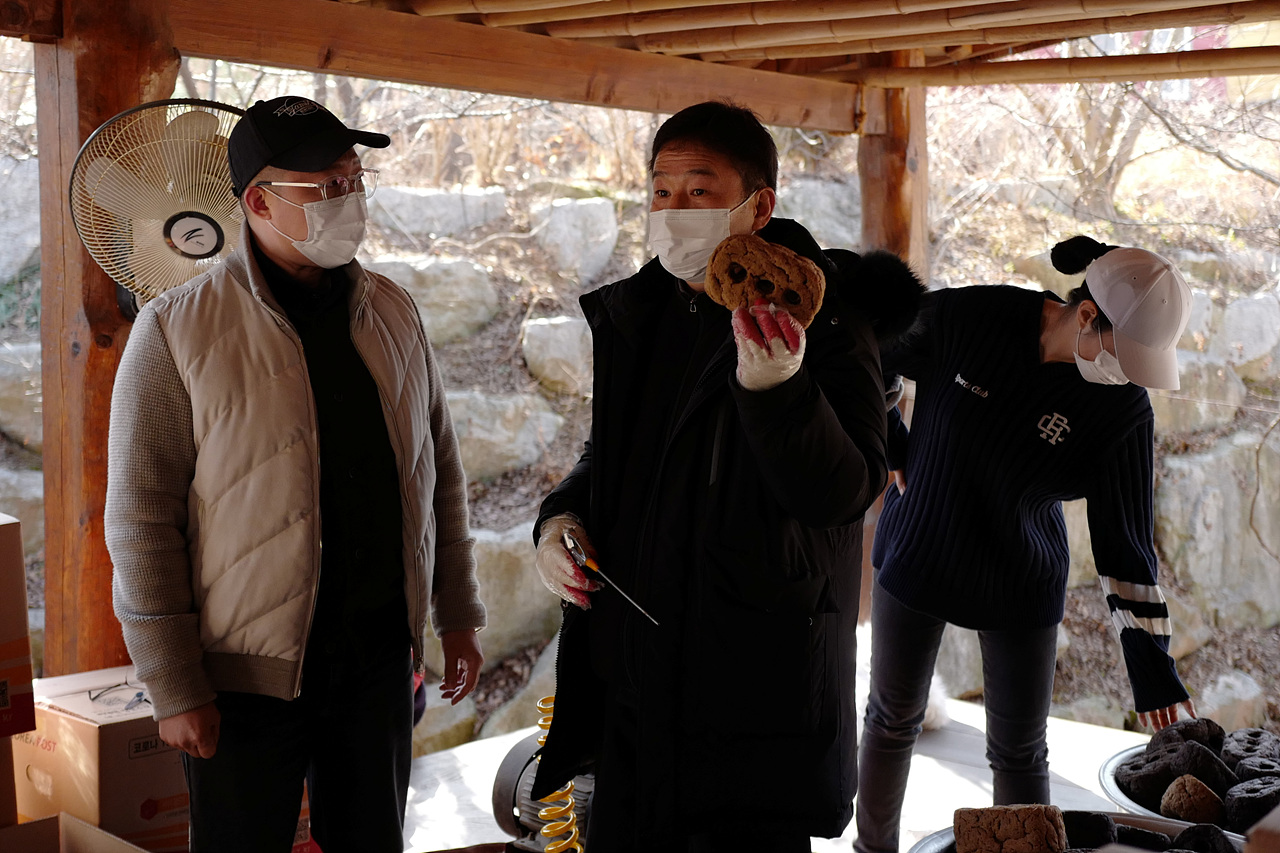
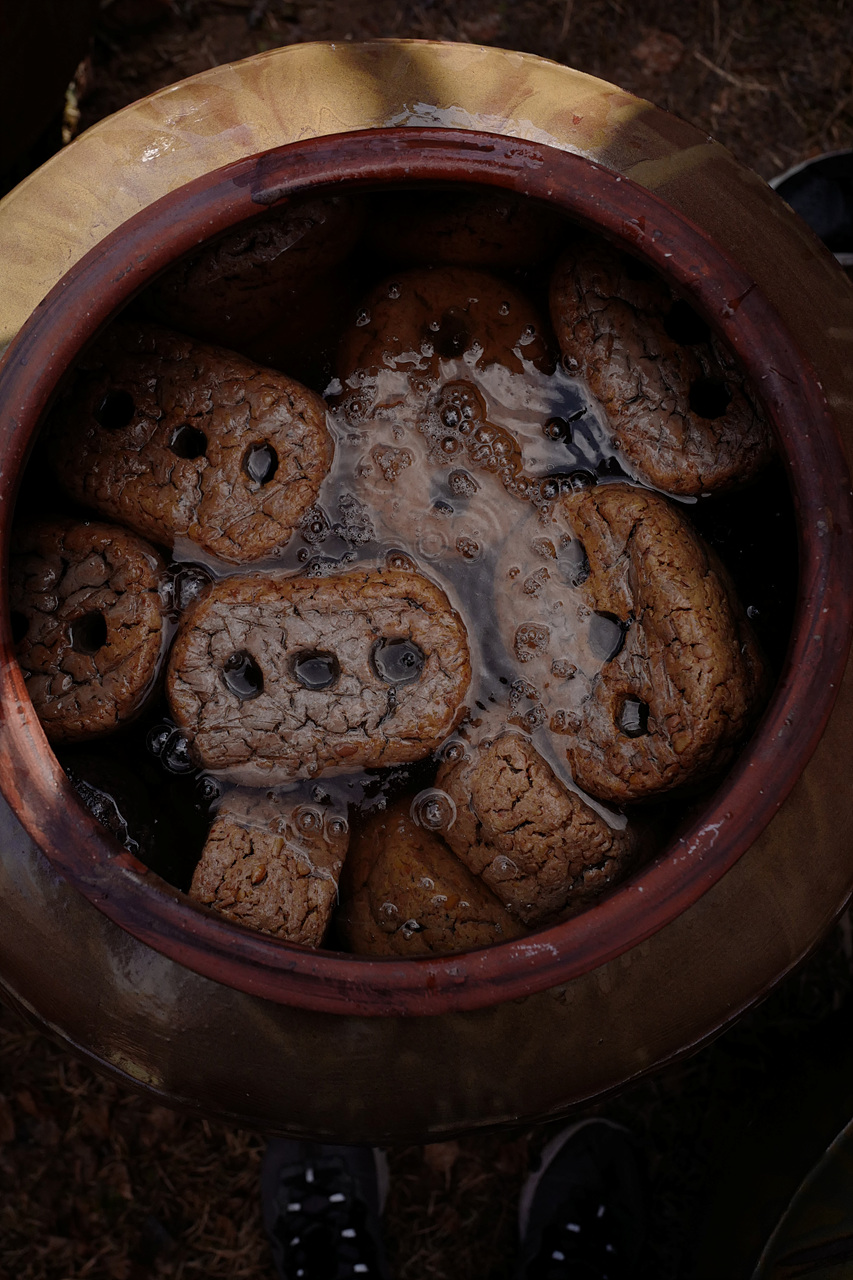
As a rule, meju is ideally rectangular and around 1.5 kg. Too heavy and the center spoils; too light and the moisture escapes too quickly for a healthy ferment. Without weighing them, fermentation pace and condition vary from block to block, and the consistency of the final jang suffers. Small adjustments — piercing the meju to improve air flow and let humidity escape, for instance — also nudge the environment in a favorable direction.
▶ Kim Myung-sung, Director, Fermentation Research Lab:
"In my experience, 1.5 kg is the most reliable weight. Skip weighing, and things get complicated fast. Even in the same conditions, fermentation speed shifts from meju to meju. A wide surface lets the mold form evenly and the moisture evaporate uniformly. Piercing holes was, at first, an experiment. But the meju ended up ripening more consistently — thanks to the extra airflow."
Temperature, Humidity, and the Resting Phase
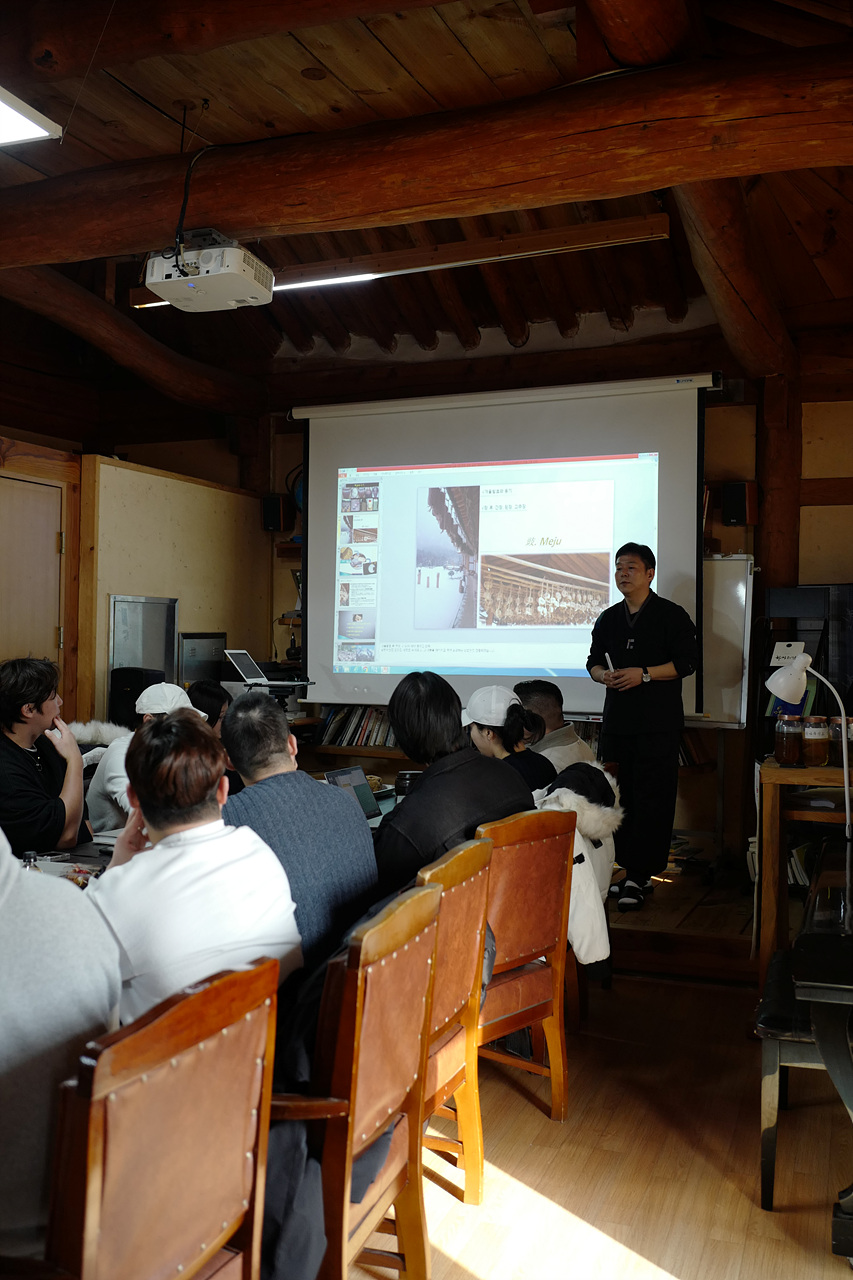
Healthy fermentation asks for conditions around 32°C and 45% humidity. Just as importantly, letting the boiled beans rest for a certain time is a decisive step for controlling moisture content — the difference between a meju that turns out well and one that doesn't.
▶ Kim Myung-sung, Director, Fermentation Research Lab:
"Below 30°C, black mold shows up every time. Above 34°C, the meju just dries out. Before the sun-drying stage, about a third of the meju's weight should have already been lost — too much moisture and it collapses. When you rest the beans, you have to read the weather too. Watching only the gas flame is a recipe for failure. Resting isn't a one-off step; it's continuous observation."
Why We Bother Fermenting Meju at All
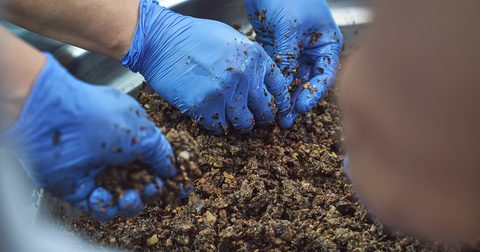
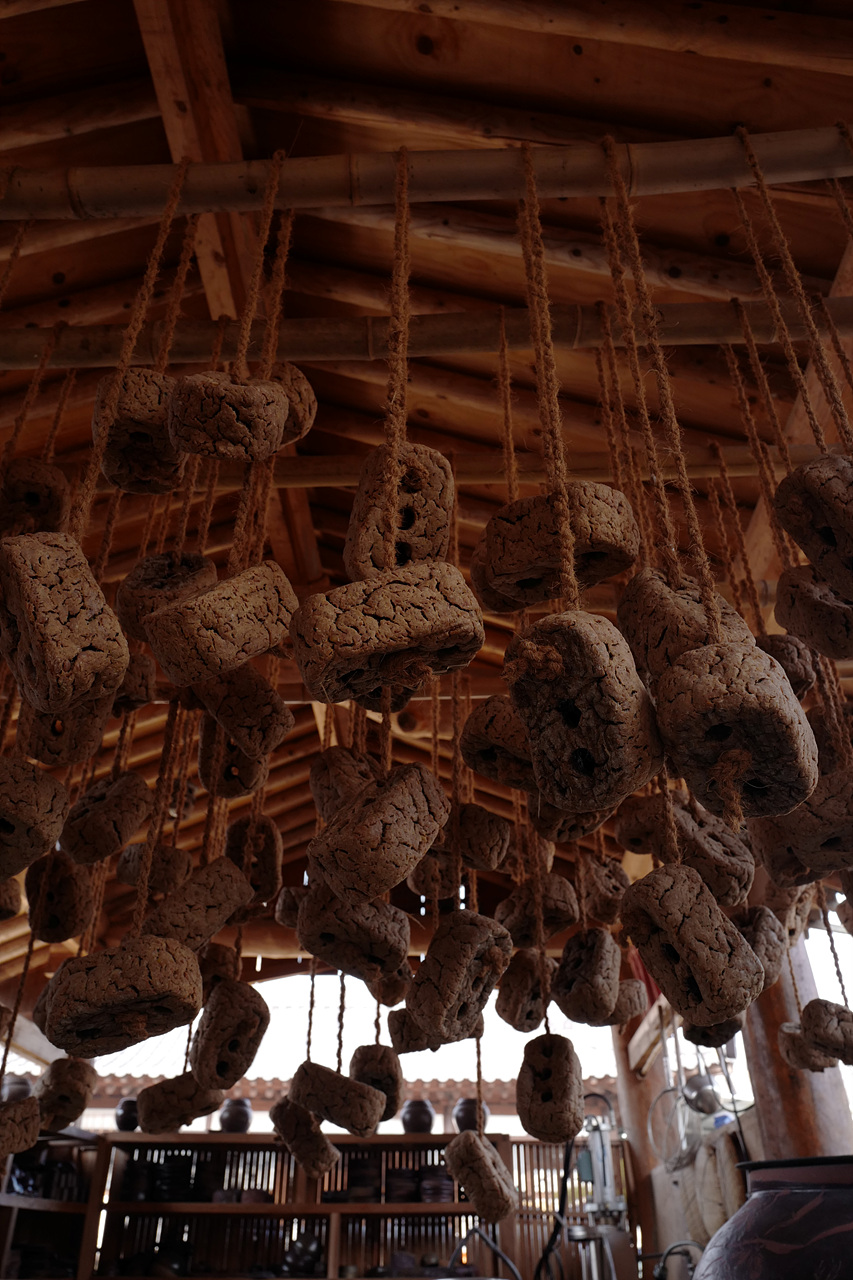
Meju is preparation for jang, but it is also the vehicle for the enzymes that microbes bring. The core purpose of making meju is to generate the enzymes that break the soy's long-chain proteins into short-chain amino acids. There's a specific reason we make meju in winter: at low temperatures, the protein-breaking enzymes are most active. If you simply dry the beans and plunge them into jang, the ferment doesn't take, no flavor develops, and what you get instead is cheongjang — a thin, watery result.
▶ Kim Myung-sung, Director, Fermentation Research Lab:
"Why do we make meju? To generate enzymes. Those enzymes have to cut the soy protein into small pieces before jang can turn out properly. The proteins need to be broken down into low-molecular-weight pieces — that's what gives doenjang and ganjang their umami. A well-fermented meju will steep like tea leaves when you pour brine over it. If the meju is under-fermented, no amount of brine will get you anything more than cheongjang."
Jeongwol Mal-nal and the Meaning of Cold, Dry Days
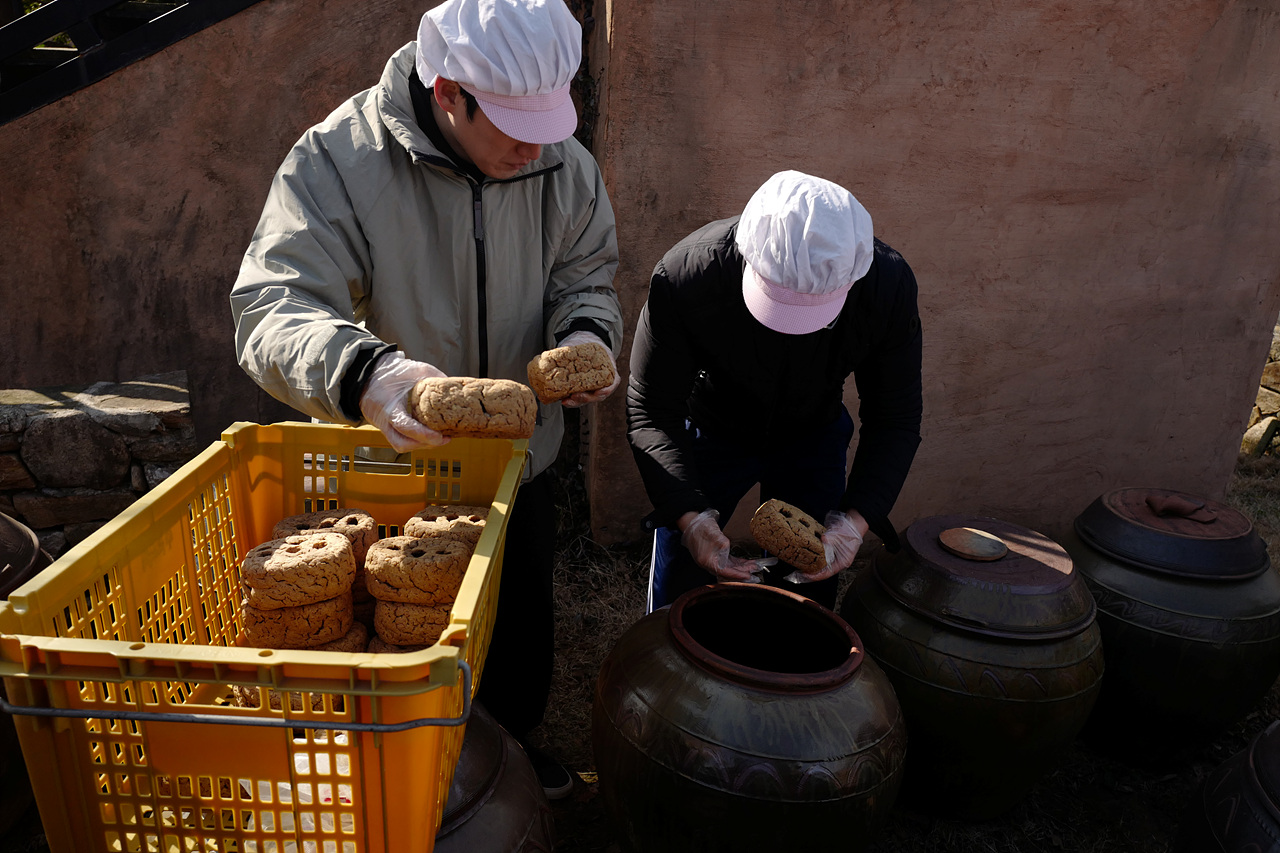
Jeongwol Mal-nal — the "Horse Day" in the first lunar month, long believed to be the best day to set jang — isn't superstition. It's the period when temperature and humidity align most favorably. The cold suppresses stray microbes, and the low ambient humidity holds bacterial activity in check. Setting jang on Mal-nal is a scientific choice grounded in experience. The name itself carries meaning: "let us make a ganjang as clear and clean as horse's blood."
▶ Kim Myung-sung, Director, Fermentation Research Lab:
"The first lunar month is the coldest stretch of the year, and it's also the driest. That's what makes it the best time to set jang. Mal-nal isn't just folk belief — it's a wish, that the ganjang will come out as clear as horse's blood. Culture, but also science. Water is at its coldest, bacteria are at their lowest, and fermentation runs at its best. Temperature and humidity are the deciding variables in fermentation. Tradition figured that out through experience."
Women and the Culture Around the Table
Fermenting meju and setting jang weren't merely technical exercises — they were rituals that gathered women's role and household culture into a single practice. On jang-setting day, women held their words and moved with care; the taste of the jang shaped the family's diet for the whole year. The technical work ended with the meju; jang-setting day was the day the responsibility and pressure landed.
▶ Kim Myung-sung, Director, Fermentation Research Lab:
"Jang-setting day belonged to the domain of ceremony, not just craft. That's why people spoke less and worked with deliberate care. In the old days, women even sealed their mouths with paper — that's how careful they were. Ruining a meju meant erasing the household's seasoning for the year, so women held themselves to that standard. On that day, they'd tuck the things spirits are said to dislike — chile peppers, charcoal, pine needles — into the jang jar as protection."
How Regional Ferment Cultures Adapted
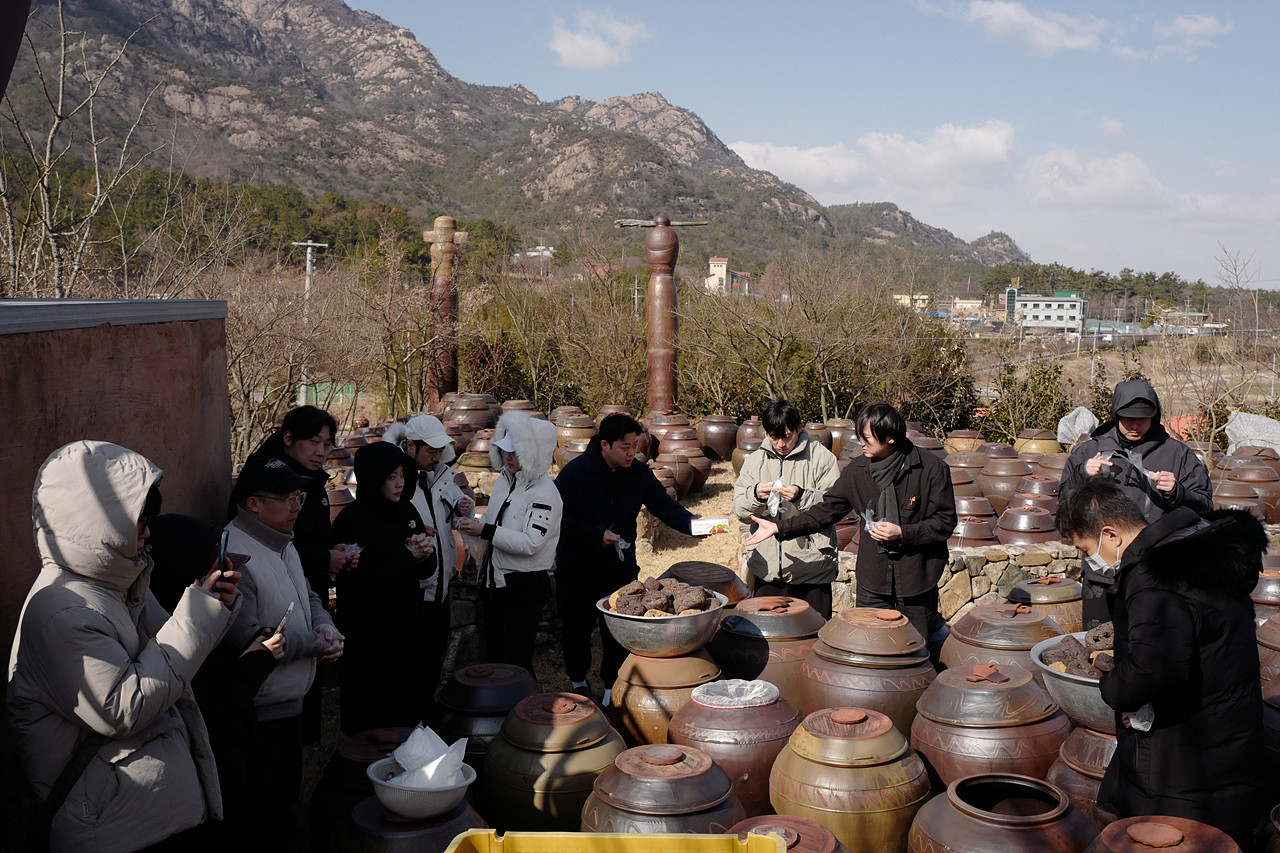
In places like Gangwon Province, where black mold takes hold easily, ripening meju is difficult, and quick-ferment jangs like makjang took root instead. It's a case study in how a jang culture reshapes itself around its own natural environment. Sigeumjang in Yeongcheon, Gyeongsang; mukdukjang in Muan, Jeolla; kkaemukjang — all of them are traces of alternate jang cultures that grew up to lower the odds of a failed ferment.
▶ Kim Myung-sung, Director, Fermentation Research Lab:
"Gangwon settled on makjang instead of doenjang. The meju wouldn't rise properly, so they fed it to the animals and used makjang instead. In houses where doenjang wouldn't come out right, once you ground it, it wasn't really edible. So they used substitute jangs like makjang. Sigeumjang is still on the market in Yeongcheon — soft, a bit murky, but the region treats it as a taste of memory. Every region had its own alternatives: tart-kimchi-broth jang, kkaemukjang, even duemjang."
Fermentation isn't "leaving it to nature." It's a delicate craft in which temperature and humidity, moisture and density, the ecology of the mold and the exact moment of its work all have to be managed. For a single jang to be finished, technique, time, environment, and care have to layer over one another. Tradition doesn't survive by being copied; it survives when it is understood, interpreted, and adjusted for the next generation. Recording is the first step. If we record, analyze, and learn through time, all of us — someday — will be able to set jang from evidence rather than instinct.