We need a K-BBQ guide made for international visitors!
One of the meals most travelers to Korea consider a must is grilling meat at a Korean gogijip. Many have already tried some version of Korean grilling back home, but when they get here they are full of questions: which cuts to order, and how they are meant to be eaten. And yet, industry people say, as the number of foreign visitors climbs, the basics — reservations, menus, restaurant information — have not caught up. So this nanrohoe gathered around the question of what, exactly, would help international guests enjoy a Korean grill house more fully.
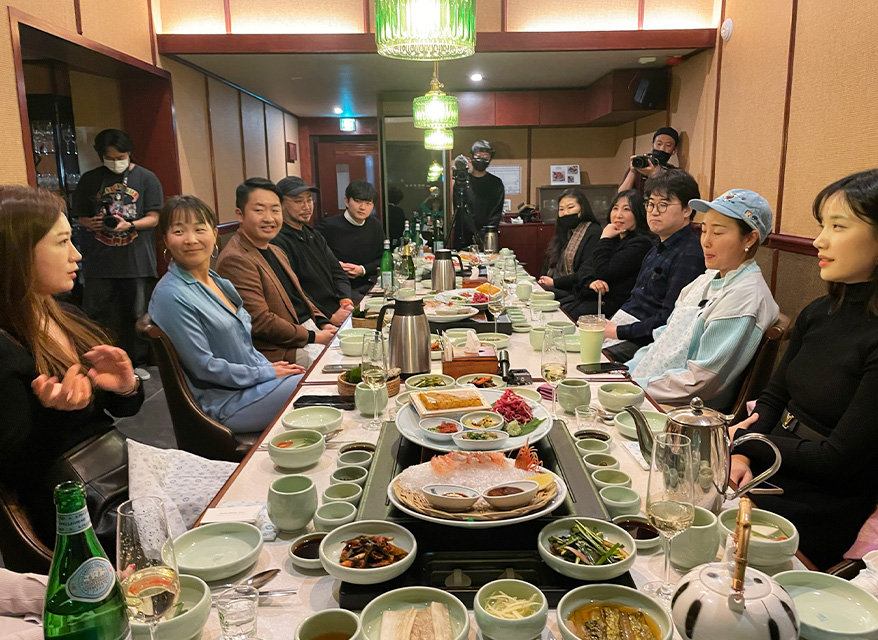
The English-speaking world calls it 'Korean barbecue,' but that name itself is worth arguing over — is 'barbecue' really the right word for what happens at a Korean gogijip, and how do you even render 'gogijip' into English? The naming question quickly opened out into a deeper one: what is the essence of this thing? A shared sense emerged: with the range of vegetables and seasonings, and the whole table gathered around a fire and cooking together, 'barbecue' in the Western sense does not really contain what Korean grill culture is.
From How to Order to How to Eat — What Visitors Actually Need
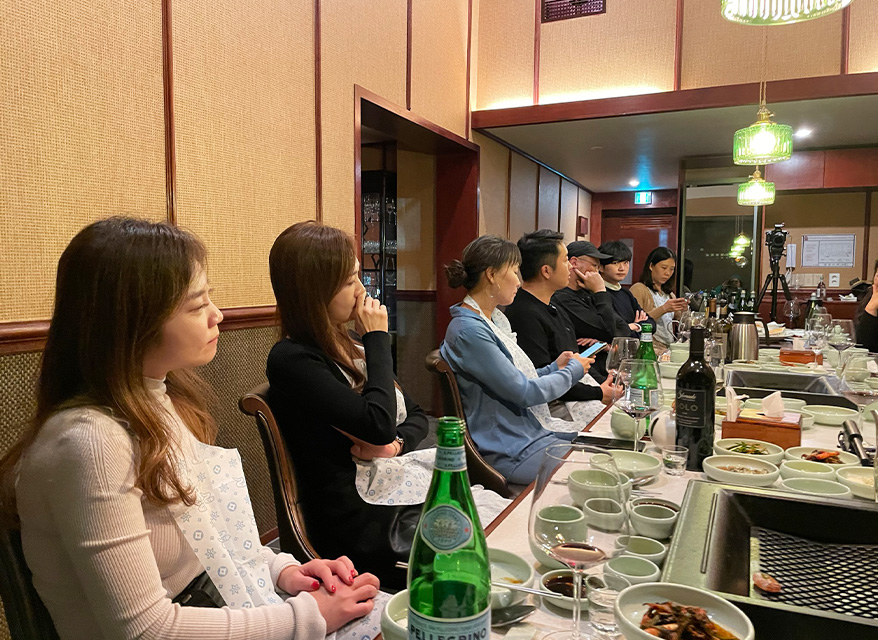
Participants who have actually hosted international guests offered their own suggestions from experience. Things that feel obvious to a Korean — that meat is not ordered strictly one portion per person but with room to spare, or as add-ons through the meal; how to build a ssam and use the seasonings; how to combine your drinks — the more the room talked, the longer the list of things they wanted to explain. The group also worked through whether the umbrella of 'Korean barbecue' should really stretch beyond pork and beef to the wider range of meats and other ingredients that end up on the grill — and how to introduce the lesser-known Korean ingredients that grill beautifully.
What It Really Comes Down to: a Global Marketing Strategy
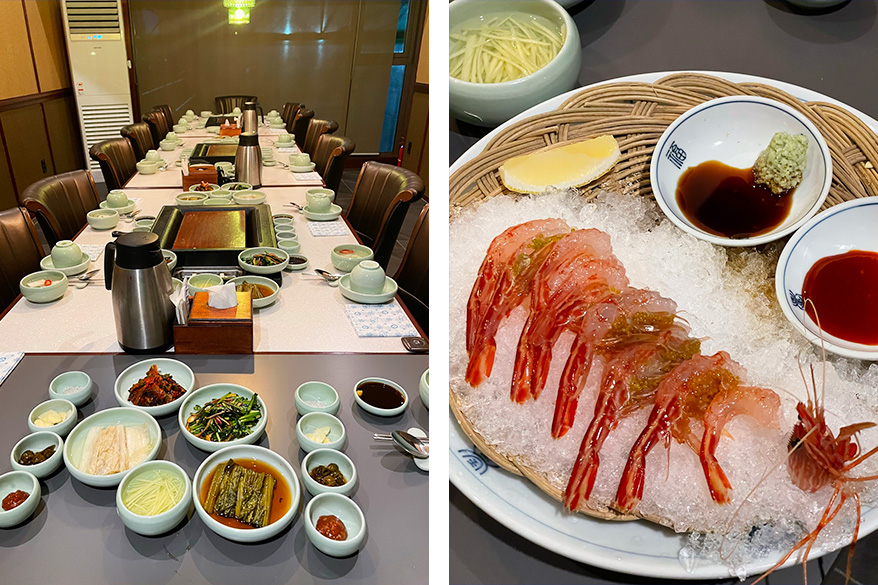
The room converged on one point: for the international guest, Korean grill culture is not just food — it is a full, layered experience. From there the conversation opened out. Kim Ji-won, CEO of Hansae MK, spoke about the kind of dress and apron that would help build the visual identity of a Hansik restaurant. Lim Ji-sun, CEO of Bohae Brewery, talked about which drinks could lift the atmosphere at a grill house and bring out more of the flavor of the meat, and made a case for the charm of maesilju — plum wine — as a fruit wine to reach for. Jeon Hee-ran, journalist at GQ, added that the real work is figuring out which platforms, and which kinds of content, would actually reach international guests where they are.